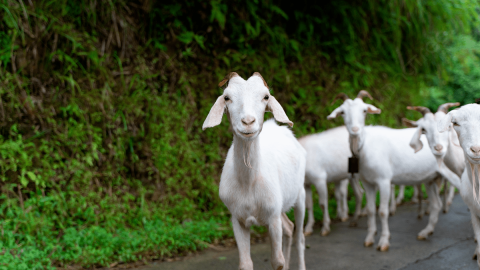
One of the most fascinating everyday sights in Antigua and Barbuda is the small herds of goats that wander freely through villages, hillsides, and even along roads during the day—only to return home on their own each afternoon.
For visitors, this daily routine can appear almost unbelievable: goats moving calmly through the landscape without fences, herders, or supervision, yet reliably finding their way back to their owners around 4:00 p.m. each day.
A Traditional Caribbean Practice
In Antigua and Barbuda, goat rearing has long been part of rural life. Instead of keeping animals enclosed all day, many farmers allow their goats to roam freely so they can graze naturally on shrubs, grasses, and roadside vegetation.
This system works because goats have an extraordinary homing instinct. After spending the day grazing across open land, they gradually make their way back to the same yard or pen where they are kept at night.
An Unofficial Island “Clock”
Locals often joke that the goats run on their own schedule. As the afternoon approaches, small groups begin moving back toward their villages. By around 4 p.m., many can be seen returning home in orderly lines along familiar paths.
For residents, it is a normal part of daily life. For visitors, it can feel like witnessing a small piece of island magic.
Part of Antigua’s Living Culture
These roaming goats are more than just livestock. They represent a traditional relationship between people, animals, and landscape that has existed for generations. In many ways they are part of the island’s living cultural heritage, reflecting a slower rhythm of life tied to nature and community.
For tourists exploring Antigua’s countryside, encountering a herd of goats calmly crossing the road or grazing by the sea often becomes an unexpected and memorable moment—one that captures the unique character of the island beyond its famous beaches.