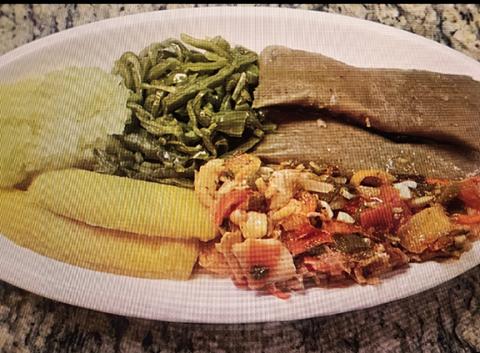
A culinary identity shaped by Africa, Europe, and the wider Caribbean
Antigua and Barbuda’s cuisine is more than island fare — it is a living archive of migration, resistance, and survival. While often described simply as Caribbean cooking, the food of Antigua and Barbuda carries strong West African foundations, traces of Ethiopian culinary traditions, European colonial influences, and regional Caribbean exchange.
National Dish: Fungee and Pepperpot
The national dish is fungee (pronounced “foon-jee”) and pepperpot. Fungee is a cornmeal-based dish similar to Italian polenta but culturally closer to West African staples like fufu or banku. The technique of stirring ground maize or cassava into a smooth, firm starch is directly linked to enslaved West Africans who adapted familiar foodways using available New World crops.
Pepperpot is a rich, slow-simmered stew often made with greens (spinach, callaloo, or other local leaves), okra, eggplant, and salted or fresh meats. Its layering of spices, heat, and leafy greens echoes West African one-pot stews. The pairing of starch + greens + protein is distinctly African in structure.
West African and Ethiopian Influences
The culinary DNA of Antigua and Barbuda reflects the forced migration of Africans to the Caribbean.
West African Influence
Use of okra, yams, eddo, sweet potatoes, and plantains. One-pot stews (pepperpot tradition)
Cornmeal preparations similar to fufu. Rice-based dishes seasoned with herbs and salted meats
Ethiopian Resonance
While not directly Ethiopian in origin, similarities can be seen in:
Communal eating traditions (shared platters after church) Spiced stews built slowly with layered seasoning
The integration of greens and legumes into daily meals
These culinary structures mirror broader African food systems centered around community, starch-based staples, and slow-cooked stews.